Builders risk, property values, and the hard market are reshaping property insurance for contractors. If you've been surprised by significant cost increases on your property lines over the past two years, you're not alone — and the reasons behind those increases are worth understanding.
This post draws on insights from the Travelers Institute webinar "The Evolving Property Insurance Landscape: Strategic Response and Agent Participation" (November 12, 2025), in which Travelers experts examined how evolving property insurance market pressures are being addressed through analytics and innovative solutions. I've translated those insights into what they mean for construction contractors specifically.
The Property Market Environment
The commercial property insurance market has been in a sustained hard market for several years, driven by a combination of factors that have simultaneously increased losses and reduced carrier capacity:
Catastrophic Loss Accumulation
Catastrophe losses — hurricanes, wildfires, severe convective storms (hail and wind), and flooding — have exceeded historical norms for multiple consecutive years. Carriers and reinsurers have responded by re-pricing catastrophe-exposed risks and, in some cases, exiting certain geographies entirely. Even contractors who don't operate in traditionally catastrophe-prone areas are affected, because their carriers are managing portfolio-level cat exposure.
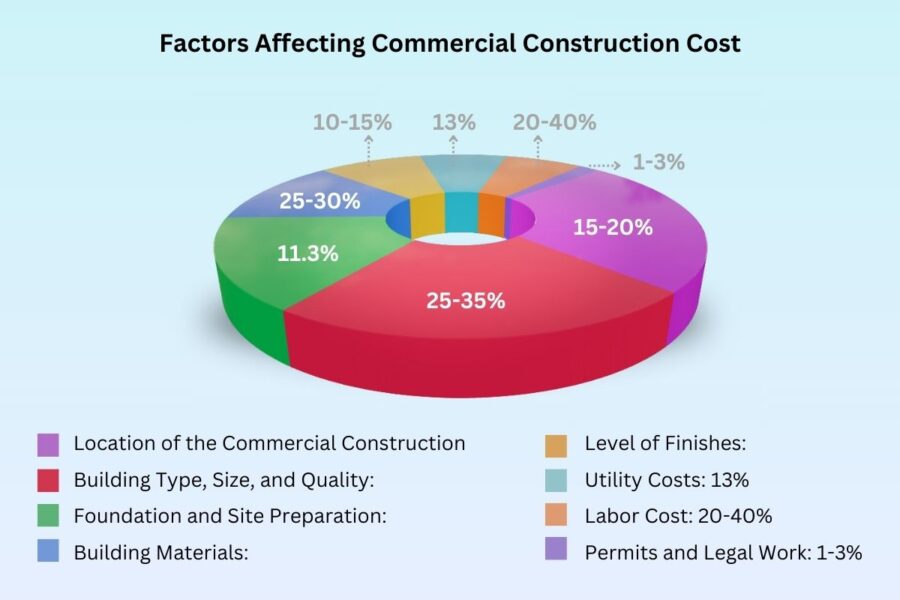
Construction Cost Inflation
Here's the specific problem for contractors: your property values — the insurable value of your equipment, tools, materials on site, and any owned structures — have increased dramatically with construction cost inflation. But many contractors haven't updated their stated values to keep pace.
This creates a co-insurance problem. If you're insuring your equipment for $500,000 but the actual replacement cost is $750,000, you are your own co-insurer for the gap. When a loss occurs, the carrier pays only the proportion of the loss that corresponds to the proportion of the actual value you were insuring. The math is not in your favor.
Builders Risk Complexity
Builders risk — the coverage that protects a project under construction — has its own distinct market dynamics. Carrier appetite has narrowed, particularly for projects involving high-value materials, complex structures, or challenging locations (coastal, flood-prone, wildfire interface areas).
The Travelers webinar highlighted the role of analytics in assessing builders risk: sophisticated carriers are now using detailed exposure data — location-based hazard scores, construction type analysis, project-specific factors — to price builders risk more precisely. This means projects that are well-documented and risk-controlled can still get competitive terms; projects that are poorly understood by the carrier tend to get conservative pricing.
What Contractors Should Be Doing
Update Insurable Values Regularly
At every renewal, verify that your stated property values reflect current replacement costs — not purchase prices or historical values. Work with an appraiser or use carrier-provided tools to validate that your equipment and tools schedules are current. The cost of being underinsured is far higher than the incremental premium for adequate coverage.
Understand Your Builders Risk Gaps
Builders risk policies have numerous standard exclusions that surprise contractors at claim time: faulty workmanship, design error, earth movement, flood, and mechanical breakdown are common. Know what your policy covers — and what it doesn't — before you have a loss.
Segregate and Secure Equipment
Equipment theft is a major driver of inland marine losses. Contractors who can demonstrate GPS tracking, equipment immobilization technology, and secure storage practices get better terms on their equipment floater. Some carriers offer premium credits for these risk control measures.
Manage Your Builders Risk Procurement
On larger projects, who procures the builders risk matters — and so does who is named insured. When the project owner procures, their limits and deductibles govern. When you procure, you control the coverage. For projects where you're controlling large amounts of materials and subcontractor work, procurement control has real value.
Review Your Certificate Tracking
Subcontractors working on your projects should have their own property coverage — and you should verify it. A subcontractor who causes a fire that destroys work in place and their carrier doesn't respond leaves you holding the loss.
The Analytics Advantage
The Travelers webinar noted that analytical tools are increasingly being used to help customers understand their exposure and make informed decisions. For contractors, this means that the carriers best equipped to handle your risk are the ones building sophisticated models of your exposure — not just applying historical rates.
Working with an advisor who understands how carriers use these models — and how to present your risk in the most favorable light within that analytical framework — is becoming increasingly valuable in a market that rewards precise underwriting.
Sources: Travelers Institute, "The Evolving Property Insurance Landscape: Strategic Response and Agent Participation", November 12, 2025. Available at institute.travelers.com.
Is Your Property Coverage Keeping Up?
Blueprint's program review includes a full property coverage analysis — values verification, builders risk gap assessment, and equipment floater optimization.
Book a Free Intro Call